Robotics Equipment and Toys You can easily understand about Robotics from this article
Robotics Equipment and Toys:
Robot, any naturally worked machine that replaces human exertion, however it may not take after people for all intents and purposes or perform capacities in a humanlike way. Likewise, advanced mechanics is the designing order managing the plan, development, and activity of robots. The idea of fake people originates before written history (see machine), yet the cutting edge term robot gets from the Czech word robota ("constrained work" or "serf"), utilized in Karel Čapek's play R.U.R. (1920). The play's robots were produced people, unfeelingly misused by production line proprietors until they revolted and at last annihilated humankind. Regardless of whether they were organic, similar to the beast in Mary Shelley's Frankenstein (1818), or mechanical was not determined, yet the mechanical option roused ages of innovators to assemble electrical humanoidsThe word advanced mechanics previously showed up in Isaac Asimov's sci-fi story Runaround (1942). Alongside Asimov's later robot stories, it set another norm of credibility about the reasonable trouble of creating astute robots and the specialized and social issues that may result. Evasion additionally contained Asimov's well known Three Laws of Robotics1. A robot may not harm a person, or, through inaction, permit an individual to come to hurt.
2. A robot should submit to the orders given it by people aside from where such orders would struggle with the First Law.
3. A robot should secure its own reality as long as such insurance doesn't struggle with the First or Second Law.This article follows the advancement of robots and mechanical technology. For additional data on mechanical applications, see the article automation.Though not humanoid in structure, machines with adaptable conduct and a couple of humanlike actual properties have been produced for industry. The main fixed modern robot was the programmable Unimate, an electronically controlled pressure driven hard work arm that could rehash subjective successions of movements. It was created in 1954 by the American specialist George Devol and was created by Unimation Inc., an organization established in 1956 by American architect Joseph Engelberger. In 1959 a model of the Unimate was presented in a General Motors Corporation pass on projecting production line in Trenton, New Jersey. In 1961 Condec Corp. (subsequent to buying Unimation the previous year) conveyed the world's first creation line robot to the GM manufacturing plant; it had the unpalatable errand (for people) of eliminating and stacking hot metal parts from a pass on projecting machine. Unimate arms keep on being created and sold by licensees all throughout the planet, with the car business staying the biggest buyer.More progressed PC controlled electric arms guided by sensors were created in the last part of the 1960s and 1970s at the Massachusetts Institute of Technology (MIT) and at Stanford University, where they were utilized with cameras in automated hand-eye research. Stanford's Victor Scheinman, working with Unimation for GM, planned the main such arm utilized in industry. Called PUMA (Programmable Universal Machine for Assembly), they have been utilized since 1978 to amass car subcomponents, for example, run boards and lights. Jaguar was broadly imitated, and its relatives, huge and little, are as yet utilized for light get together in hardware and different businesses. Since the 1990s little electric arms have gotten significant in atomic science research facilities, absolutely taking care of test-tube clusters and pipetting mind boggling successions of reagents.
Versatile mechanical robots additionally first showed up in 1954. In that year a driverless electric truck, made by Barrett Electronics Corporation, started pulling loads around a South Carolina basic food item stockroom. Such machines, named AGVs (Automatic Guided Vehicles), ordinarily explore by following sign emanating wires settled in solid floors. During the 1980s AGVs obtained microchip regulators that permitted more intricate practices than those managed by basic electronic controls. During the 1990s another route technique got well known for use in stockrooms: AGVs furnished with a checking laser locate their situation by estimating reflections from fixed retro-reflectors (in any event three of which should be apparent from any area).
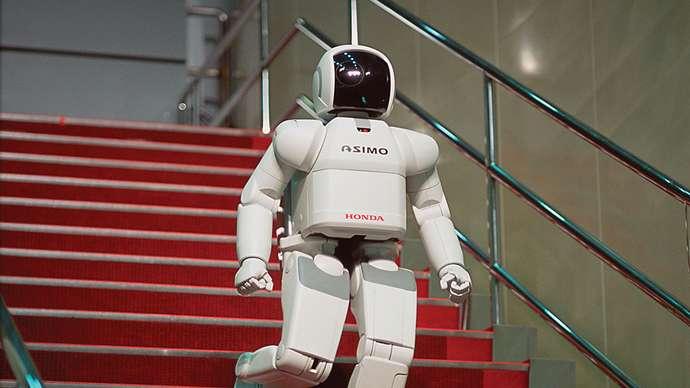
Albeit modern robots previously showed up in the United States, the business didn't flourish there. Unimation was gained by Westinghouse Electric Corporation in 1983 and shut down a couple of years after the fact. Cincinnati Milacron, Inc., the other significant American water driven arm producer, sold its advanced mechanics division in 1990 to the Swedish firm of Asea Brown Boveri Ltd. Proficient Technology, Inc., turned off from Stanford and Unimation to make electric arms, is the last American firm. Unfamiliar licensees of Unimation, eminently in Japan and Sweden, proceed to work, and during the 1980s different organizations in Japan and Europe started to energetically enter the field. The possibility of a maturing populace and subsequent laborer lack prompted Japanese producers to explore different avenues regarding progressed computerization even before it gave a reasonable return, opening a business opportunity for robot creators. By the last part of the 1980s Japan—drove by the advanced mechanics divisions of Fanuc Ltd., Matsushita Electric Industrial Company, Ltd., Mitsubishi Group, and Honda Motor Company, Ltd.— was the world chief in the assembling and utilization of modern robots. High work costs in Europe also supported the appropriation of robot substitutes, with mechanical robot establishments in the European Union surpassing Japanese establishments without precedent for 2001.
Robot Toys:
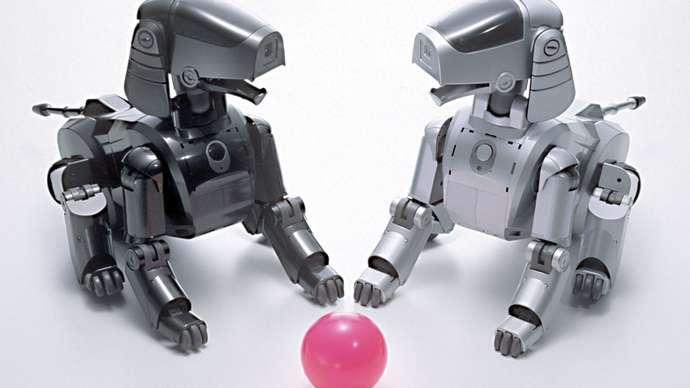
Absence of dependable usefulness has restricted the market for mechanical and administration robots (worked to work in office and home conditions). Toy robots, then again, can engage without performing assignments dependably, and mechanical assortments have existed for millennia. (See machine.) In the 1980s chip controlled toys gave the idea that could talk or move because of sounds or light. Further developed ones during the 1990s perceived voices and words. In 1999 the Sony Corporation presented a doglike robot named AIBO, with two dozen engines to enact its legs, head, and tail, two amplifiers, and a shading camera all organized by an amazing microchip. More exact than anything previously, AIBOs pursued shaded balls and figured out how to perceive their proprietors and to investigate and adjust. Albeit the main AIBOs cost $2,500, the underlying run of 5,000 sold out promptly ridiculous.